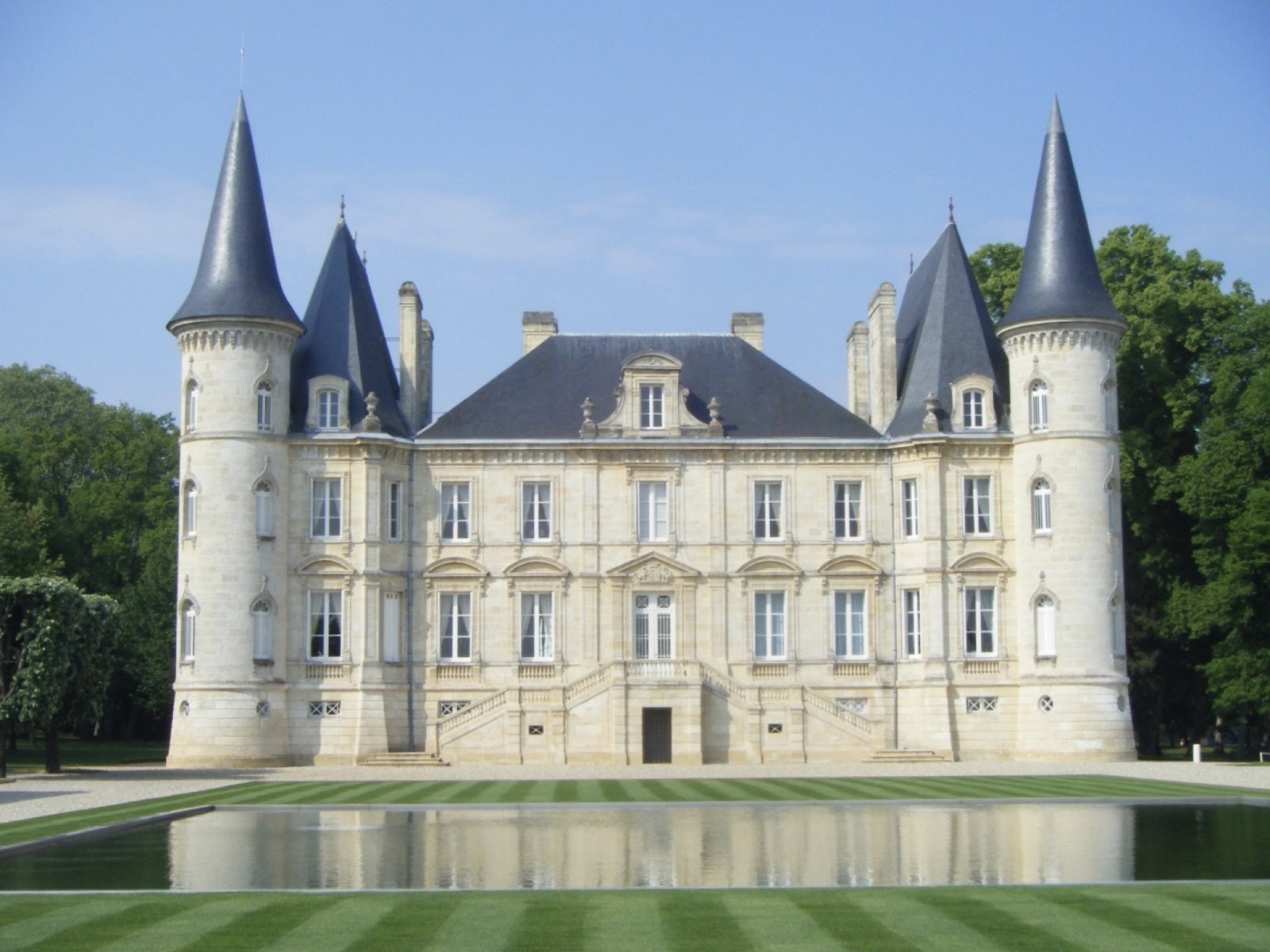
Few classifications in the world have such longevity. Drawn up in just a few weeks for the needs of an exhibition, the 1855 classification still shapes today, more than a century and a half later, how the great wines of Bordeaux are bought, collected and discussed. But to understand this classification, one must also understand its rules and limitations.
An imperial command, an express execution
The story begins with an exhibition, not a tasting. In 1855, Napoleon III organised a major World's Fair in Paris, wishing to showcase the very best of French production in every field, including wine. He therefore asked each major wine-producing region to draw up a list of its finest growths.
For the Gironde, the Bordeaux Chamber of Commerce and Industry took charge of the project, relying on the wine brokers of the Bordeaux marketplace. These brokers, ministerial officers whose job precisely consisted in knowing the prices charged château by château, held archives and records that would serve as the basis for the classification.
The criterion chosen was neither subjective nor strictly gustatory: it was the market selling price of the wines, observed over several decades, that served as the barometer for the hierarchy. The logic is simple and relentless: the longer a wine has commanded a high price, the more established its reputation is deemed to be, and the higher it climbs in the classification.
A very partial geography
This is the first point that many novices overlook: the 1855 classification does not cover all of Bordeaux, nor even the whole of the Médoc in the broad sense. It focuses almost exclusively on the Left Bank of the Garonne, and more precisely on two distinct groups.
For red wines: 60 growths of the Médoc, plus a single intruder from the Graves, Château Haut-Brion, whose reputation was already too solidly established to be ignored, even though it is not geographically located in the Médoc. These 61 properties are divided into five ranks:
- 5 First Growths
- 14 Second Growths
- 14 Third Growths
- 10 Fourth Growths
- 18 Fifth Growths
For sweet white wines: 27 growths of Sauternes and Barsac, with a separate hierarchy in three tiers:
- 1 First Superior Growth — Château d'Yquem, the sole representative of this supreme category in the entire classification
- 11 First Growths
- 14 Second Growths
What is striking, in hindsight, is everything that is missing: no wines from the Right Bank. Neither Saint-Émilion nor Pomerol, which were then under the commercial influence of Libourne rather than Bordeaux, and no dry white wines from the Graves apart from Haut-Brion. These regions therefore equipped themselves much later with their own systems:
- The Graves classification in 1953: a classification created in 1953, revised and completed by the INAO in 1959 to include whites, it is this second version that is the reference today, with 16 classed growths.
- That of Saint-Émilion in 1955: the latter with one essential difference: unlike that of the Médoc, it is revised approximately every ten years"
A hierarchy, not a score out of 20
We must re-examine what the classification actually measures. It is not an absolute judgment of quality in the manner of "best wine in the world", but a snapshot of commercial reputation frozen in 1855. A Fifth-Growth is not a mediocre wine; it is among the 61 best red wines selected across the entire Médoc and Graves, which in itself represents a rigorous selection compared to the hundreds of châteaux in the region.
The internal hierarchy itself is primarily of historical significance. In practice, the quality of many Fifth or Fourth Growths now easily rivals certain Second Growths, thanks to decades of investment, replanting and oenological progress that the classification obviously cannot reflect, since it has remained frozen in time.
A single revision in over a century and a half
This is undoubtedly the most singular feature of this classification: it has been modified only once since 1855. In 1973, after more than twenty years of efforts led by Baron Philippe de Rothschild, Château Mouton Rothschild moved from the rank of Second Growth to First Growth, joining Margaux, Lafite Rothschild, Latour and Haut-Brion at the pinnacle of the pyramid.
Apart from this single case, no promotion or demotion has ever taken place, despite considerable developments: some châteaux have disappeared, merged, changed in surface area or owner, while others, unclassified in 1855, now produce wines of a level comparable to historical classed growths.
The Médoc classification thus remains an essentially historical document, almost a piece of heritage: a photograph from 1855 that no one has touched since.
Why this classification still matters
Despite its limitations, this hierarchy continues to structure the Bordeaux market, for several concrete reasons:
- It still serves as a commercial benchmark: a château's rank directly influences the price of its bottles, the en primeur strategy and its position in international auctions.
- It has the value of heritage and storytelling: owning or visiting a First-Growth means becoming part of a history that is over a century and a half old, with all the collective imagination that entails.
- It remains a point of reference, even when contested: amateurs and professionals continue to refer to it, if only to discuss or criticise it. Proof that after more than 170 years, it remains a common language in the world of Bordeaux wine.
An exception: Sauternes has never changed
Unlike the Médoc, the classification of sweet wines in Sauternes and Barsac has seen strictly no changes at all since 1855. Château d'Yquem remains alone as Premier Cru Supérieur: a unique status that not even Mouton Rothschild, in its own category, ever needed to challenge. This total stability undoubtedly makes it the most "pure" version of the original classification, passed down intact since the Paris World's Fair.